AUTONOMOUS

Bilingual Montessori School

*
*

{{trans:31cbc19481d3f24d58e93d44f8d75898_1}} image{{trans:31cbc19481d3f24d58e93d44f8d75898_1}} image
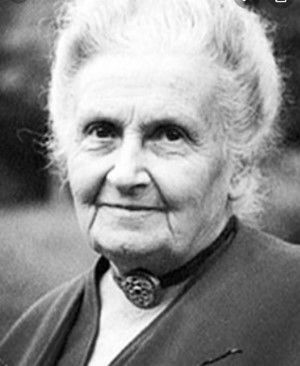
Le docteur Maria Montessori (1870 – 1952) a créé une méthode pour l’éducation des enfants qui a rencontré un très grand succès, en Italie d’abord, puis dans le monde entier.

Elle consacra alors toute sa vie à développer une véritable pédagogie, testée et théorisée, une pédagogie des plus lucides et intelligentes qui puissent exister. L’une de ses plus belles phrases que l’on peut retenir « Si vous critiquez beaucoup un enfant, il apprendra à juger. Si vous complimentez régulièrement un enfant, il apprendra à estimer ».

Une éducation nouvelle
Les enfants ont des qualités innées.


Les enfants absorbent les connaissances de leur environnement et sont naturellement des expérimentateurs, des explorateurs de leur environnement, de courageux travailleurs : "curieux de tout, capables d’une extraordinaire concentration et prêts à tout absorber comme les éponges absorbent l’eau". ("l’Esprit Absorbant").
Le travail, dit- elle est un instinct.
Le développement de l’enfant avec un matériel pédagogique approprié.

Etes-vous intéressés? Contactez-nous.

Plusieurs étapes - compétence spécifique

Les principes de la philosophie Montessori:
1. Suivi de l’enfant
2. Respecter l’enfant en tant qu’individu
3. Permettre aux enfants d’avoir suffisamment de liberté
4. Apprendre par la pratique
5. Ne pas déranger l’enfant lorsqu’il travaille
6. Proposer à l’enfant des activités appropriées
7. Maîtriser les erreurs par l’autocorrection
8. Montrer à l’enfant la bonne façon de faire les choses
9. Créer un environnement aménagé qui permettra à l’enfant d’accomplir la plupart des tâches par lui-même, un environnement soigné, à portée de main

Après plus de 15 ans d’expérience en excellence opérationnelle / amélioration continue dans des entreprises nationales et internationales, mon métier consistait à trouver le meilleur moyen d’être performant. Après beaucoup d’analyses, il s’avère que le meilleur moyen d’obtenir des résultats est de rendre les personnes autonomes et flexibles, de trouver leurs motivations, afin qu’ils soient heureux de venir au travail chaque jour et qu’ils donnent le meilleur d’eux-mêmes.
Car toute entreprise recherche la performance.
Aujourd’hui je veux me consacrer, à ce que les enfants de demain auront besoin. Ce besoin face à notre monde changeant et compétitif est de savoir apprendre par eux-mêmes, c’est de leur faire trouver cette autonomie et cette motivation, afin que dans n’importe quels métiers ou situations ils puissent s’épanouir et donner le meilleur d’eux-mêmes en étant heureux dans leur vie.

Maman de quatre enfants, j'ai expérimenté au quotidien toute la pédagogie que j'aurai le plaisir de vous transmettre lors d'ateliers ouverts par thème, aux parents le souhaitant, tout au long de l'année.
Ayant réalisé plusieurs années de bénévolat en centre sportif avec des jeunes, j’ai toujours été attiré par la pédagogie Montessori avec ses principes, qui sont: le souhait de développer leur intelligence, leur indépendance et leur amour de l'apprentissage. Depuis leur plus jeune âge mes enfants suivent cette direction en école Montessori, et nous retrouvons totalement ce que notre monde recherche dans leur épanouissement personnel et professionnel, leur progrès et leur comportement.
Passionnée par les domaines de la pédagogie, du développement de l'enfant et de la performance motivationnelle, j'ai également un diplôme en science du vivant, d'éducateur / coach sportif.

Séduite par l'approche holistique et scientifique de la pédagogie Montessori, approuvée qui plus est, par les neurosciences actuelles et donnant de merveilleux résultats sur le développement de l'enfant, j'ai alors suivi plusieurs formations en 3-6 ans et 6-12 ans.

N'hésitez pas à nous contacter pour de plus amples informations.


Laurence Biatarana Gall

Fondatrice & Directrice Administrative _ Educatrice Montessori 6-12 ans

"Let Montessori guide your child to success"

Read More  

Recruitment position (back to school 2023)

Montessori educator 3-6 years old

Open position (Back to school 2023)

Assistant English-speaking educator

Vincent Biatarana-Gall

Technical Service Manager

"I care about the environment, the well-being and all the safety of our children"

Read More  

Back to School

Back to School

Le Lundi 2 Septembre 2024 dès 8h20 pour l'ambiance 6-9 ans Le Mardi 3 Septembre 2024 dès 8h20 pour l'ambiance 3-6 ans selon calendrier de l'Education Nationale

Hours

Hours

Monday, Tuesday, Thursday and Friday Arrival from 8:20 a.m. to 8:30 a.m. / Departure from 4:20 p.m. to 4:30 p.m.

Meal

Meal

Meals are provided by Pause Gourmande and carry the Fourchette Verte label. The ingredients are essentially ORGANIC. All meals are taken together
Extracurricular

Extracurricular

In order to give you greater flexibility to you, parents, and to protect your children, breakfast is offered to children arriving at 7:30 in the morning. Morning 7:30 a.m. to 8:30 a.m. Evening 4:30 p.m. to 6:30 p.m.
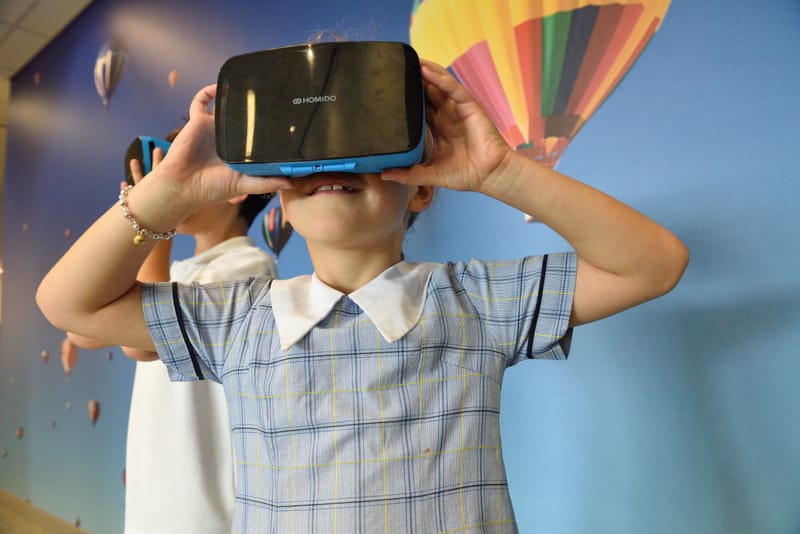
Outside school

Outside school

Autonomous offers you the possibility of registering your children for activities according to the calendar EVERY WEDNESDAY during the school period as well as certain holiday periods (see calendar 2023-2024)

Learn More
Theme Evening - Parents

Theme Evening - Parents

Come to discover and better understand how your children evolve through the presentation of activities.

1. What is Montessori pedagogy?

Montessori pedagogy is an educational approach founded by Italian pediatrician Maria Montessori. It focuses on understanding and developing each child's individual abilities, using a prepared environment and hands-on activities to stimulate their natural curiosity, desire to discover and love of learning. The Montessori pedagogy encourages children to develop their self-confidence, their independence and their creativity by letting them explore and freely choose their activities.

For more information click on this LINK

2. What is the goal of Montessori education?

The goal of Montessori education is to develop the total personality of the child by stimulating his natural desire to learn, encouraging his independence and strengthening his self-confidence. This pedagogical method aims to train curious, creative and autonomous children who will be able to realize their full potential in life. Montessori pedagogy is based on the work of Maria Montessori, an Italian pediatrician, and her observations on child development.

3. How is a day in a Montessori class organised?

A Montessori classroom day is organized flexibly to allow each child to work at their own pace and have a personalized learning experience. Activities may include working with learning materials, hands-on activities, group games and small group work time. Children are encouraged to explore and discover on their own, under the careful supervision of the teacher. Rest periods and free time are also important to allow children to relax and recharge their batteries. The Montessori classroom day can also include activities like meditation, gymnastics, and music to build confidence, creativity, and coordination.

For more information click on this LINK

4. What is the role of the teacher in the Montessori classroom?

In a Montessori classroom, the teacher has a unique and challenging role: to be a guide for the children on their learning journey. By observing each child's needs and interests, the teacher can encourage them to explore, discover and grow at their own pace. By using an individualized approach, the teacher can establish a bond of trust and respect with each child, allowing each to develop optimally. The role of the Montessori teacher is to bring out the best in each child and help them grow into independent, creative, and curious thinkers.

For more information click on this LINK

5. How are the materials and activities chosen in the Montessori classroom?

In the Montessori classroom, materials and activities are carefully selected to help children develop to their full potential. Materials and activities are chosen for their ability to stimulate the senses, promote manipulation and encourage children's independence and curiosity. Montessori pedagogy focuses on the development of the whole person, taking into account their intellectual, physical and emotional needs. Materials and activities are designed to be adaptive, allowing children to progress at their own pace and according to their individual ability. The choice of materials and activities is also influenced by the teacher's understanding of each child's development and their particular interests. In sum, the materials and activities in the Montessori classroom are chosen to allow each child to discover, explore and learn in a meaningful and stimulating way.

6. Do the children work in small groups or individually in the Montessori classroom?

In the Montessori classroom, children work both in small groups and individually. The Montessori method encourages children to explore and discover the world around them independently and at their own pace, which helps them to develop their self-confidence and self-esteem. On the other hand, small group activities allow children to socialize, cooperate, share and grow together. Montessori teachers work to balance small group and individual activities to stimulate the whole development of each child.

For more information click on this LINK

7. How is the progress of children in the Montessori class assessed?

In a Montessori classroom, children's progress is assessed differently than in traditional classrooms. Emphasis is placed on careful observation of children to assess their personal development and progress. Educators use informal observations, portfolios and journals to record each child's accomplishments and challenges which are shared with parents quarterly at parent-educator instructional meetings at the Autonomous School. The educators also work in collaboration with the parents and provide them with regular updates on the progress of the child (the educational follow-up book).
Assessments are designed to benefit the child and to provide information about their interests, strengths and needs, rather than assigning grades or rankings.

8. How is Montessori pedagogy different from other educational approaches?

La pédagogie Montessori est une approche éducative qui se différencie des autres approches en plusieurs points clés :
  1. Enfant en tant qu'individu : La pédagogie Montessori considère chaque enfant comme une personne unique avec des talents, des intérêts et un rythme de développement propres. Les enseignants Montessori travaillent donc avec chaque enfant à son propre niveau et rythme pour les aider à développer leur plein potentiel.
  2. Environnement préparé : Dans une salle de classe Montessori, l'environnement est soigneusement préparé pour offrir une variété d'activités et de matériels qui encouragent la découverte et l'apprentissage autonome.
  3. Autonomie et responsabilité : Les enfants sont encouragés à prendre des décisions et à faire des choix quant à leur apprentissage, ce qui les aide à développer leur sens de l'autonomie et de la responsabilité.
  4. Apprentissage pratique : La pédagogie Montessori met l'accent sur l'apprentissage pratique à travers des activités concrètes et des expériences pratiques plutôt que sur des leçons théoriques.
  5. Développement global : La pédagogie Montessori se concentre sur le développement global de l'enfant, en intégrant les aspects intellectuel, physique, émotionnel et social de leur développement.
En somme, la pédagogie Montessori est une approche éducative qui vise à soutenir le développement unique de chaque enfant en utilisant un environnement préparé, une autonomie accrue, un apprentissage pratique et un développement global pour aider les enfants à découvrir et à développer leur plein potentiel.

9. Is the Montessori pedagogy suitable for children with special needs?

Yes, the Montessori pedagogy can be adapted to children with special needs. The Montessori philosophy emphasizes the individual development of each child, considering each child's unique differences and talents. Many Montessori teachers are trained to work with children with special needs, using modifications and adaptations to help them succeed.
However, it is important to note that the ability of a Montessori classroom to work with children with special needs will depend on the skills and training of the teachers as well as the availability of resources to help them succeed. It is therefore important to fully understand your child's specific needs and talk with teachers and administrators to determine if a Montessori classroom can meet those needs.

10. How can parents support Montessori practice at home?

Nous avons plusieurs ateliers que nous proposons aux parents afin de vous donner des idées, pistes, propositions de différents matériels qui pourrait être utilisées dans notre école _ voici notre LIEN

Les parents peuvent soutenir la pratique Montessori à la maison de plusieurs façons :
  1. Créer un environnement de vie pratique : Les parents peuvent créer un environnement de vie pratique en utilisant des objets réels pour les activités quotidiennes, telles que la préparation des repas, le nettoyage et les tâches ménagères.
  2. Fournir des activités pratiques : Les parents peuvent fournir des activités pratiques pour leurs enfants, telles que la manipulation de grains de riz ou de pâtes, ou des jeux de construction simples.
  3. Encourager l'autonomie : Les parents peuvent encourager l'autonomie de leurs enfants en les laissant faire certaines choses par eux-mêmes, comme se habiller, se coiffer et se laver les dents.
  4. Respecter le rythme de l'enfant : Les parents peuvent respecter le rythme de l'enfant en permettant à leur enfant de déterminer son propre rythme pour les activités quotidiennes et les tâches.
  5. Favoriser la découverte : Les parents peuvent favoriser la découverte en offrant à leur enfant des expériences variées et en répondant à ses questions avec intérêt et enthousiasme.
  6. Favoriser la concentration : Les parents peuvent favoriser la concentration de leur enfant en créant un environnement calme et sans distractions, et en offrant des activités qui stimulent la concentration de l'enfant.
  7. Éduquer par l'exemple : Les parents peuvent éduquer par l'exemple en montrant comment traiter les objets avec soin et respect, en parlant calmement et en écoutant attentivement les autres.
En général, les parents peuvent soutenir la pratique Montessori à la maison en créant un environnement sécurisant, stimulant et respectueux pour leur enfant, en permettant à leur enfant de découvrir et d'apprendre par lui-même, et en encourageant son autonomie et son indépendance.

  • 6 Rue Amédée VIII de Savoie, Saint-Julien-en-Genevois, France

Discover our bilingual Montessori school! With our method, your children will develop practical and linguistic skills while strengthening their self-confidence and their success. You can also make an appointment on the parents page - make an appointment. At your convenience

Saint-Julien-en-Genevois, France

Bilingual Montessori Director & Educator for children from 3 to 6 years old

Saint-Julien-en-Genevois, France

Assistant English-speaking Montessori educator for children

Saint-Julien-en-Genevois, France

English-speaking Montessori Teaching Assistant

the International Montessori Association (AMI)

world leader

This organization is the world leader in the promotion and development of the Montessori method. Their website offers detailed information on the method, principles and teachings of Maria Montessori.

Lien AMI

The Montessori MOMents Blog

Blog

This blog offers practical advice and tips for parents and educators who want to implement the Montessori method in their daily lives.

Lien Blog

American Montessori Society (AMS)

Organization

This organization is dedicated to promoting Montessori education in the United States. Their website offers information on Montessori schools, programs and teachings.

Lien AMS

"Discovering the Child"

Book by Maria Montessori

"The Discovery of the Child" by Maria Montessori is a founding book on the Montessori method which offers a new approach to education for young children. The book describes the scientific approach that Montessori followed to discover the basic needs of children and how to satisfy them through an environment adapted to their needs. The objective of the Montessori method is to promote the integral development of the child by stimulating his natural instincts, his desire to learn and his thirst for discovery. According to Montessori, the child has an innate ability to learn and develop independently, provided they are in an appropriate environment. The author describes the Montessori method in detail, presenting the different aspects of the environment, the teaching materials, the activities and the fundamental principles that underlie the method. She also defends the importance of the presence of qualified adults to help children explore and learn, as well as the need for careful observation of children to understand their needs. In short, "The Discovery of the Child" by Maria Montessori is an essential book for understanding the philosophy and practice of the Montessori method. It provides a clear and coherent vision of how the environment can be designed to support the harmonious and independent development of children.

Lien livre